What Does Water Damage Restoration Cost in Wellington, FL?
The honest answer is that it depends, and any company that skips the depends part is selling you something. This guide explains what the number is actually made of: the factors that move a job from hundreds to thousands, the published cost ranges worth knowing, and how documentation protects you whichever way you pay. No invented prices, and no pressure. Just the math as we see it on real Wellington jobs.
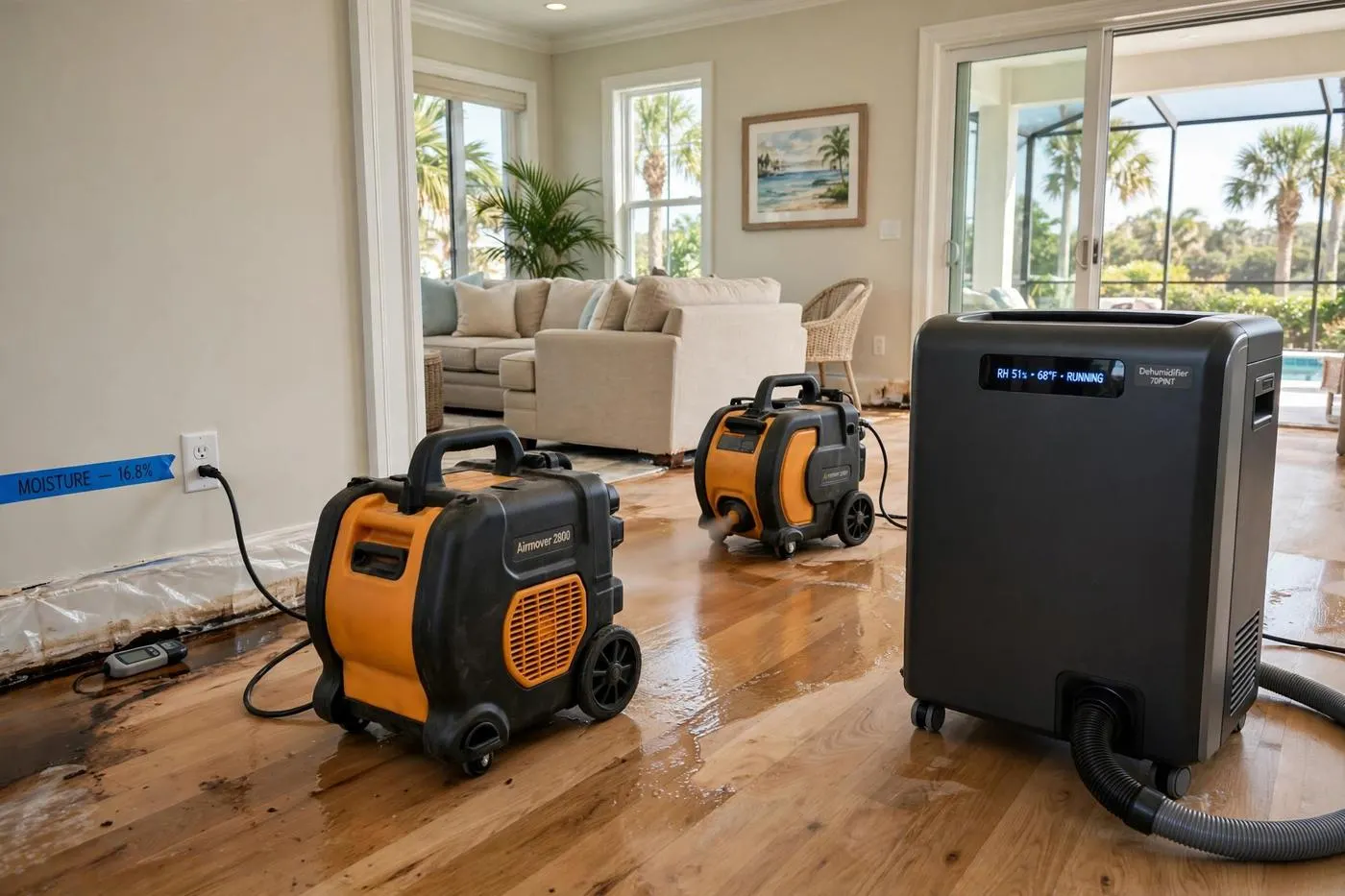
What drives the number
The water category. Clean water from a supply line is the least expensive loss to handle. Gray water adds protective measures and limits what can be saved. Category 3 water, meaning sewage and floodwater, requires containment, protective equipment, and disposal of porous materials, and it prices accordingly.
How much is wet. A single bathroom and a whole first floor are different jobs wearing the same name. Square footage, the number of rooms, and whether water reached wall cavities and flooring systems set the scale of extraction and drying.
The materials involved. Tile and concrete dry in place. Hardwood, laminate, cabinets, and carpet with padding are less forgiving, and some cannot be dried honestly at all. What has to come out costs more than what can be dried, every time.
How long the water sat. A leak caught in an hour is an extraction and a few days of fans. The same leak found after a seasonal closure can mean mold remediation on top of the water work. Time is the most expensive ingredient in this business, and it is the one you control by calling early.
Access and contents. Furniture to move, protect, or pack out, tight crawl conditions, and multi story drying all add labor. None of it is mysterious once someone shows you the moisture map, which is why we start there.
For context, published national data from HomeAdvisor puts the average water damage restoration job at $3,868, with a typical range of $1,383 to $6,369. Treat those figures as national context, not a quote for your home. Wellington housing stock, home sizes, and the complexity of the loss move a real job within that range, and large losses run past it. What we can promise is that after an assessment, your scope is in writing before the work expands.
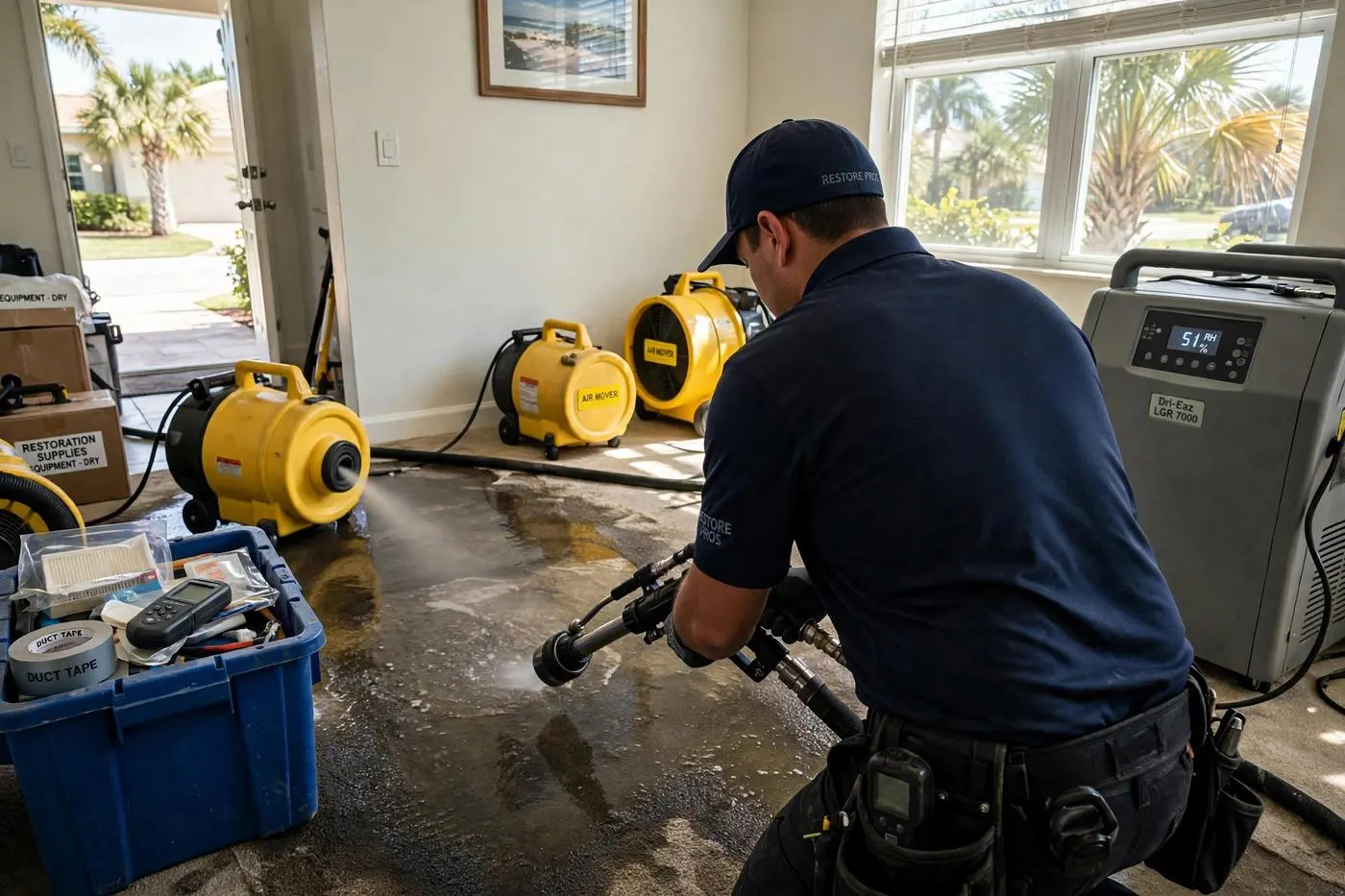
Per-service cost factors
Water damage restoration
The bill is built from extraction volume, the number of drying days, and what materials come out. A contained appliance leak caught early sits at the low end of the published range. A whole floor of hardwood over a slab, wet for a week, does not. Drying days are verified by moisture readings, so you never pay for equipment sitting in a dry room.
Mold remediation
Homeowners searching for the average cost of mold remediation in Wellington run into the same wall: the area affected and the containment required decide the number, and both are unknowable from a photo. A small contained area under a sink is one job. Growth through a wall cavity into the duct system is another entirely. Testing before remediation keeps the scope honest, and verification after keeps it finished.
Fire and smoke damage
Fire cost is rarely about the burned area alone. Soot type matters, because wet soot and dry soot clean differently and wet soot punishes mistakes. Smoke travel decides how many rooms get cleaned, odor treatment depends on how deep the source sits in materials, and the water from firefighting adds a full water job underneath the fire job. Contents cleaning and pack out are their own line.
Sewage cleanup
Category 3 work carries costs clean water never sees: protective equipment, containment, sanitizing, and regulated handling of what comes out. Porous materials in the affected zone, meaning carpet, padding, drywall, and upholstered furniture, usually leave the house rather than being dried. On acreage properties, a septic failure adds its own repair questions beyond the cleanup itself.
Biohazard cleanup
Pricing follows the size of the scene, the disinfection scope, and disposal requirements. These jobs are quoted after an assessment, handled quietly, and documented carefully for families, landlords, and property managers. If you are facing one, call and talk to us. The first conversation costs nothing and commits you to nothing.
Insurance process
Your first job is mitigation. Most homeowner policies expect reasonable steps to prevent further damage once a loss is discovered: stop the water at the source, and get a mitigation company moving. Waiting to see whether things dry on their own is how a covered water job grows a mold problem that becomes an argument.
Documentation is the product you keep. Whether or not you file a claim, the record of the loss is what protects you. We build it as we work: photographs before anything is disturbed, moisture readings and a daily drying log, an itemized scope of what was dried, cleaned, or removed, and photos of the verified result. The file is yours, complete, whether the job is large or small.
Communication stays simple. You share the file with your insurer and adjuster, and we walk them through the scope and the readings when they have questions. Restorers who work this way are easy for adjusters to work with, because every line in the scope points at a photo or a number.
What nobody honest can promise. Whether a specific loss is covered is your insurer's decision under your policy, full stop. Sudden and accidental water damage and long term slow leaks are treated very differently by most policies, and no restorer can change that at your kitchen table. What we control is the quality of the mitigation and the quality of the record, and we put both in writing. Any company that guarantees you a coverage outcome before the adjuster reviews the file is guessing with your expectations.
Drying time and estimates
Drying time follows the same logic as cost: category, materials, and how far the water traveled. A clean water loss in a tiled room can verify dry in a few days. Hardwood over a slab, water inside wall cavities, and Wellington summer humidity all stretch the calendar, and black water adds cleaning and removal before drying even starts. Any timeline quoted without moisture readings is a guess wearing a uniform. Our assessments measure first: you get the map, the expected drying window, and what would change it, in writing. If a company gives you a finish date before they have taken a single reading, ask them what the date is based on.
Frequently Asked Questions
Can you give me a price over the phone?
We can give you the factors, the published ranges on this page, and a straight explanation of what your description sounds like. A firm price needs the moisture map, because the difference between a two day dry out and a wall opening is invisible from the driveway. Anyone quoting firm numbers sight unseen is planning to renegotiate in your living room.
What is the average cost of mold remediation in Wellington?
There is no honest single number, because area and containment decide it. A small area under a sink, caught early, is a contained half day scope. Growth inside wall cavities or the air handler is a multi day remediation with testing on both ends. What we can do is test first, scope exactly what exists, and price only that.
Does insurance pay for water damage restoration?
Coverage is your insurer's decision under your policy, and it usually turns on the cause. Sudden events like a burst pipe are treated very differently from slow leaks that ran for months. We cannot promise an outcome, and you should be careful with any company that does. We can promise complete documentation, which is the part of the process we control.
Why does one job cost three times what a similar looking job cost?
Because the visible damage is the smallest part of the story. Category, hours the water sat, materials that cannot be dried, and whether mold got started decide most of the gap. Two kitchens can look identical in a photo and be entirely different jobs on a moisture meter.
Request an Assessment
Tell us what happened and where. We call back with a plan and an honest read on cost before any work starts. If water is actively spreading, call (728) 235-4938 instead, a conversation beats a form when the clock is running.
Request an Assessment
Tell us what happened. We call back with a plan and an honest read on cost before any work starts.