Home › Services › Storm Damage Restoration in Wellington, FL
Storm Damage Restoration in Wellington, FL
The storm takes an hour. The water it leaves behind takes weeks if you let it.
What storm damage restoration in Wellington, FL covers
A storm loss is three losses stacked: the opening, the water, and the wait.
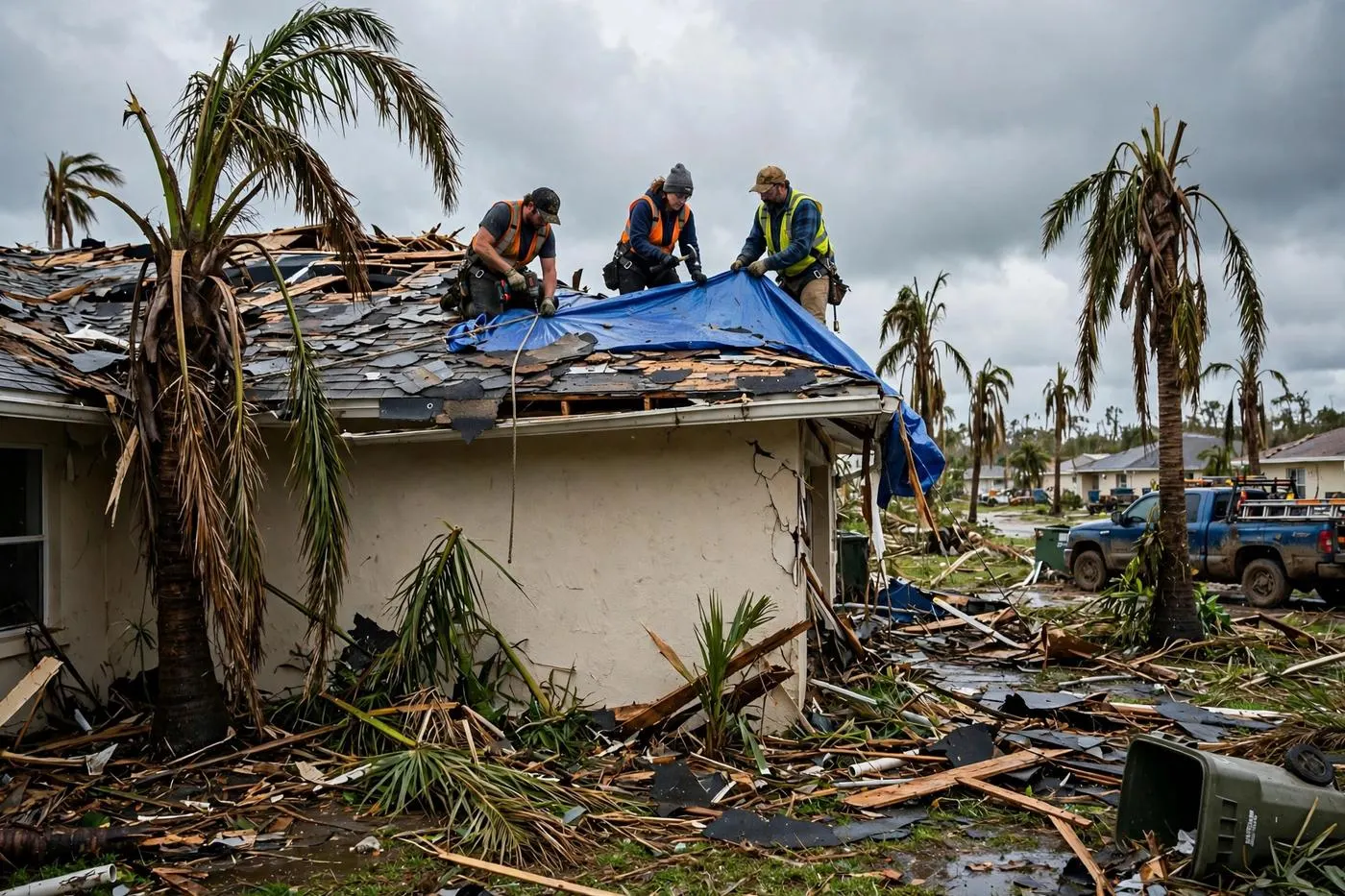
The opening is the hole the storm made: missing shingles, a broken window, a lanai frame twisted into the pool cage. The water is whatever came through that opening or rose up around the slab. The wait is what happens between the storm and the fix, because a wet house in Florida humidity starts growing mold inside of two days. Storm damage restoration in Wellington, FL covers all three: emergency tarping and board-up to close the opening, extraction and flood cleanup for the water, and verified structural drying so the wait does not turn a storm claim into a mold claim. One crew, one sequence, one documented file.
Roof tarping and board-up: the first 24 hours
Stop the sky first. Everything else is second.
A missing section of shingles in July is not a roofing inconvenience; it is a funnel aimed at your attic during the next afternoon storm. Our tarping work is mechanical, not hopeful: tarps anchored with furring strips and fasteners that hold in the next band of wind, edges sealed so driven rain cannot lift and pour under. Broken windows, sliders, and doors get boarded with plywood fitted to the opening, and damaged pool cages get secured. We photograph every opening before and after, because the condition of the property right after the storm matters to your claim file. Tarping is temporary by design. It buys the house dry days while the roofer and the adjuster do their parts.
Flood cleanup after the water rises
Floodwater is category 3 water. We treat it that way from the first step.
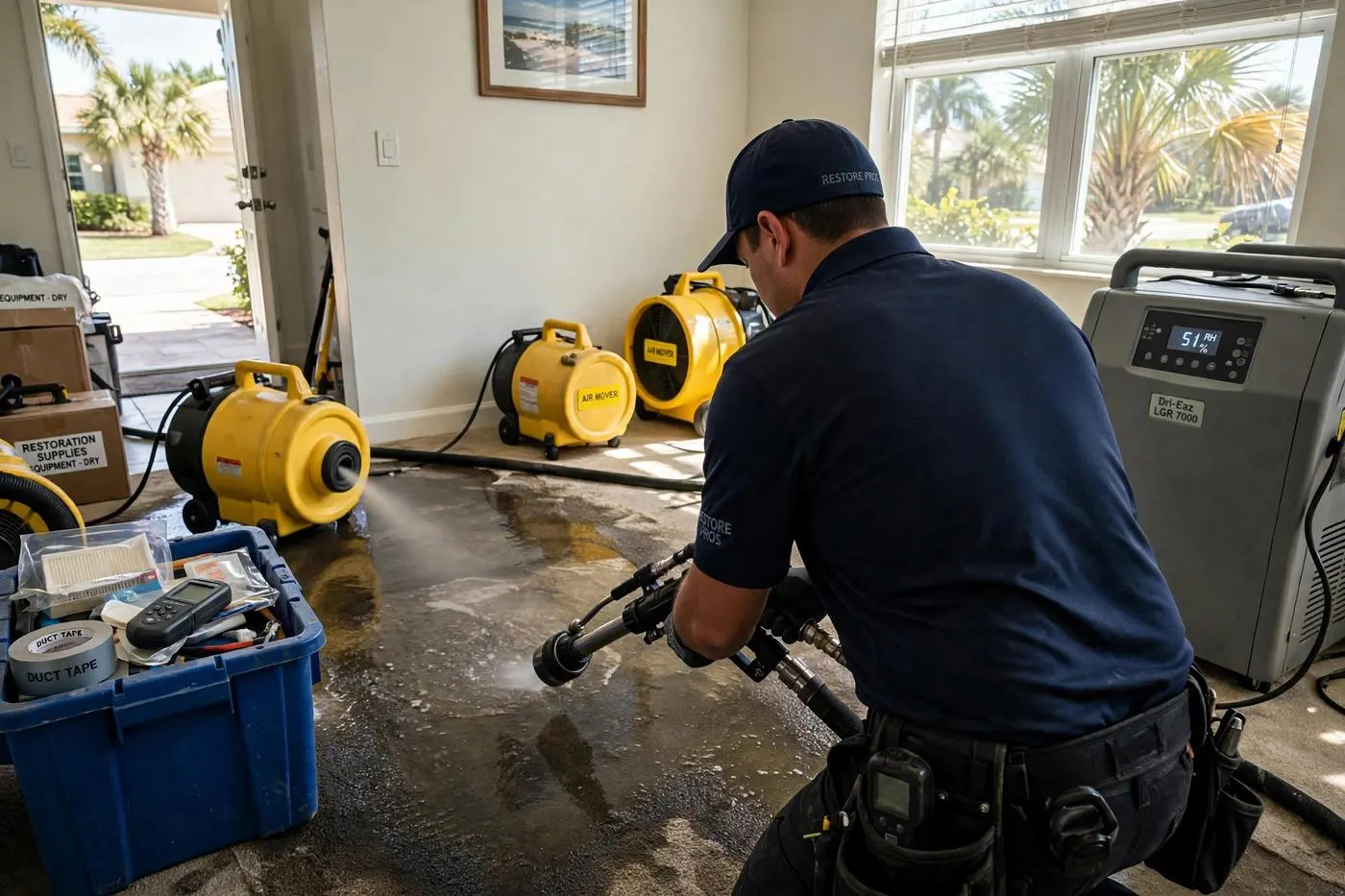
When lake and canal water or street flooding comes into a Wellington home, it carries whatever it crossed on the way: fertilizer, septic overflow, road chemicals, and bacteria. Porous materials the water touched, carpet, pad, drywall to the flood line, upholstered furniture, generally come out rather than get dried. What can be saved gets extracted, washed, and disinfected before drying begins. We cut drywall at the flood line to open the wall cavity, because the cavity holds wet insulation long after the surface looks dry. Sewage or drain backflow losses run under our sewage cleanup protocol.
When the power goes out: the second wave of damage
Outages cause their own losses, usually discovered late.
A multi-day outage after a storm quietly creates a second round of damage. Sump and well pumps stop, so groundwater the pump normally holds back finds the low points. Air conditioning stops, indoor humidity climbs past the point where mold starts on walls, and a house that survived the storm dry can come out of a four-day outage with growth on its leather goods and closet contents. For seasonal homes in Palm Beach Polo and Olympia, an outage nobody witnesses is the worst version. When power returns, resist the urge to just run the AC and move on: if the house sat hot and humid for days, have it looked at. Catching it at the humidity stage is a small job. Remediating it a month later is not.
How we handle it: secure, remove, dry, document
The order matters as much as the work.
Secure first: tarp, board, and make safe, including electrical hazards around standing water. Remove second: extraction, flood cuts where the category demands it, and unsalvageable materials out under control. Dry third: air movers and dehumidifiers placed from a moisture map, checked daily against meter readings, not a calendar. Document throughout: dated photos of damage and openings, readings, and a written scope. That file is what your adjuster works from. If the storm also started a fire, through lightning or a generator fault, that loss runs on our fire damage restoration process.
Storm season in Wellington
June through November, the village plans around the sky.
Wellington sits roughly fifteen miles inland, far enough that surge is not our problem and close enough that hurricane rain bands absolutely are. Our flooding is rain-driven: lakes and canals that rise over days, streets that pond, and ground so flat and saturated that water stands against slabs and garage doors. The equestrian calendar shapes the risk here. During the winter season the barns and estates around the show grounds are full and watched daily. Through storm season many sit quiet, so damage on an estate off Pierson Road can sit a week before anyone walks it. A pre-season walk-through, roof check, drain clearing, generator test, is the cheapest storm service there is.
What drives the cost
Openings, water depth, and how long the house sat wet.
A tarping-only call and a full flood remediation sit at opposite ends of this work. The honest drivers: how many openings need tarping or boarding, how deep the water got and what it carried, how much material has to come out, and how many days of drying the structure needs to reach verified readings. We scope on site and give you a written number before remediation starts; emergency securing work is scoped on the spot. For the full picture of how restoration pricing works, see our water damage cost guide.
FEMA flood guidance for homeowners lives at ready.gov/floods, and it is worth reading before storm season, not after.
Related services
Most storm losses are water losses at heart, and the deep drying protocol lives on our water damage restoration page. Belongings that got wet, from furniture to tack and documents, go through contents cleaning. Growth that appears in the weeks after a storm is handled under mold remediation.
Frequently Asked Questions
A storm just damaged my roof in Wellington. What do I do first?
Stay clear of any room with a sagging, wet ceiling, and shut off power to wet areas if you can do it safely. Then call us for tarping and board-up. Every afternoon storm that hits an open roof adds a room to the loss, so securing the opening today matters most.
How long can a roof tarp stay on?
A properly fastened tarp is a bridge, not a repair. In Florida sun and wind, plan on weeks, not months, and have it checked after any further strong storm. We will tell you the honest condition of yours when we install it.
The water in my house came from the lake rising, not a pipe. Is that different?
Completely. Rising outdoor water is category 3, the most contaminated class. Porous materials it touched generally have to be removed, and the structure disinfected before drying. It should never be handled with fans alone.
My power was out for four days after the storm. The house looks fine. Should I worry?
Have it checked. Four humid days without air conditioning is enough time for mold to start on walls, closets, and contents, often before anything is visible. Catching it at that stage keeps it a drying job instead of a remediation job.
Request an Assessment
Tell us what happened and where. We call back with a plan and an honest read on cost before any work starts. If water is actively spreading, call (728) 235-4938 instead, a conversation beats a form when the clock is running.
Request an Assessment
Tell us what happened. We call back with a plan and an honest read on cost before any work starts.