Home › Services › Mold Testing in Wellington, FL
Mold Testing in Wellington, FL
Sometimes you can smell mold in a Wellington home but cannot find it. Sometimes you are buying, selling, or about to reopen a seasonal house and need facts instead of guesses. Mold testing in Wellington, FL is how we answer those questions: a structured inspection, moisture readings, and lab-analyzed samples that show what is growing, where it is concentrated, and whether indoor levels look normal for Florida.
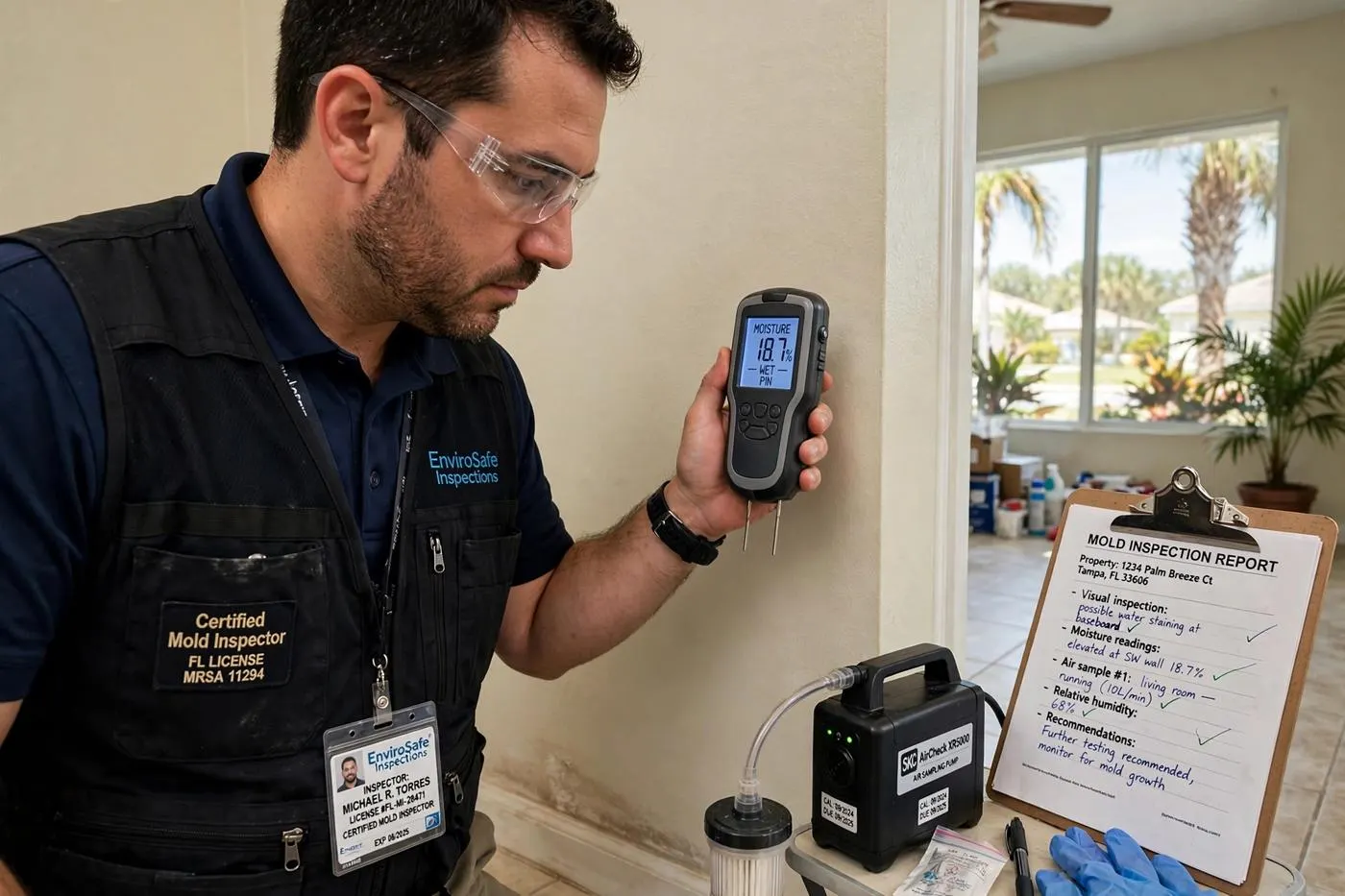
When mold testing is worth paying for, and when it is not
Testing earns its cost in specific situations. You suspect hidden growth because of a persistent musty odor, unexplained staining, or a past leak that was dried without documentation. You are closing on a Wellington property and want the mold picture in writing before money moves. Your home sat shut through the summer and you want a baseline before the season starts. Or a remediation job is finished and you want independent-style verification that it worked.
Testing is usually not worth it when growth is plainly visible and the source is obvious. If we can see the colony and the leaking pipe behind it, your money is better spent fixing the problem than confirming what everyone already knows. We will tell you that honestly before we sell you a sample set.
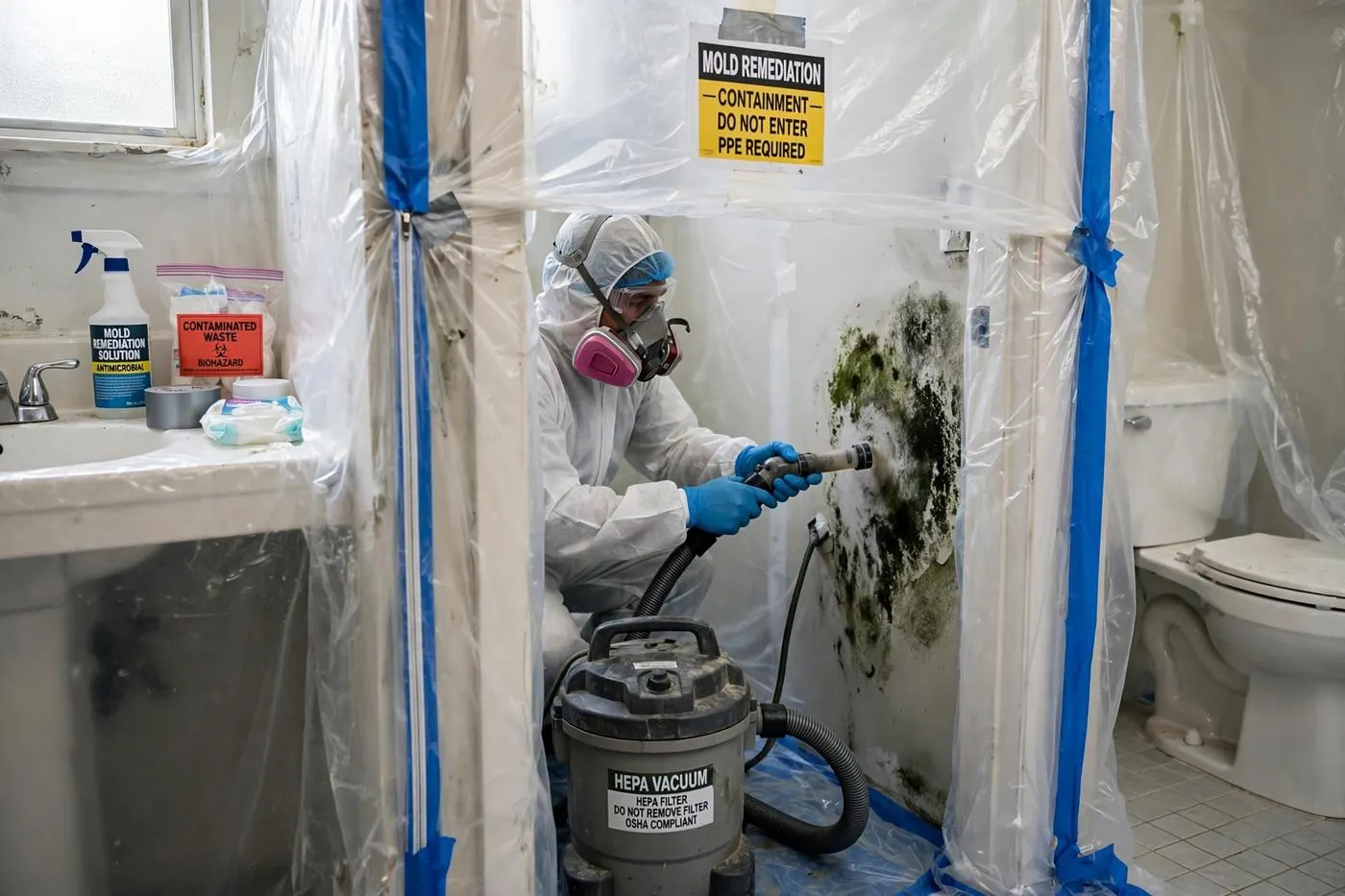
How mold testing in Wellington, FL works: inspection and sampling
Visual inspection. We walk the property looking for growth, staining, and the moisture conditions that produce it, including attics, air handlers, under-sink cabinets and exterior-wall closets.
Moisture mapping. Meters and thermal imaging show which walls, ceilings and floors are wet right now, and how far the wet area extends. Mold follows moisture, so the map usually explains the samples.
Air sampling. We take air samples indoors and one outdoors as a control, because the honest comparison for a Florida home is the air right outside it. Samples go to an accredited laboratory for analysis.
Surface sampling. Where growth is visible but the species is in question, a swab or tape lift identifies what is actually there.
Written results. You get the lab report plus our plain-language read of it: which species showed up, how indoor levels compare to the outdoor baseline, and what we recommend next.
What your lab results can and cannot tell you
A lab report identifies species and spore counts. Compared against the outdoor control sample, it can show whether indoor air carries more of a particular mold than it should, which points toward a hidden indoor source. It can confirm that a visible patch is what it looks like.
What a test cannot do is certify a home as safe or diagnose a health condition. There is no official pass-or-fail exposure line for homes, and we do not pretend otherwise. If health symptoms are your concern, the testing gives your physician real data to work with, and it gives us the map for fixing the source. Treat any company that promises a test will prove a house is healthy with suspicion.
Post-remediation verification: proof the job worked
The most valuable test is often the last one. After a mold remediation job, clearance sampling checks that spore levels inside the contained area have returned to a normal range and that no reservoir of growth was missed. It protects you with documentation if you later sell the home, and it protects the remediation scope from guesswork. Verification sampling follows the same method as a diagnostic visit: indoor samples, an outdoor control, lab analysis, and results in writing.
Testing seasonal and equestrian homes in Wellington
Wellington's housing pattern creates testing situations most towns never see. Homes around the show grounds and in communities like Palm Beach Point close up for months at a time, and a slow condensate leak can run all summer in an empty house. A pre-season inspection and sample set is how owners find that problem in October instead of moving in on top of it in January.
Equestrian properties add their own wrinkle: barns, tack rooms and wash racks keep damp organic material close to living quarters, and guest houses or staff apartments are often the first spaces to grow mold and the last to be checked. We sample those spaces as their own zones so the report separates a barn problem from a house problem.
What mold testing costs depend on
Pricing follows the number of samples and the size of the property. A focused visit on one problem room takes fewer samples than a whole-house baseline on a multi-structure equestrian property. Lab fees are per sample, so we agree the sampling plan and its cost with you before anything is collected. Our water damage cost guide explains how testing fits into the overall cost of a mold project.
When we cite health guidance, we cite the EPA: its mold resources for homeowners are at epa.gov/mold.
Related services
When testing confirms a problem, mold remediation is the fix, built around containment and source control. When samples point at active moisture, our water damage restoration team handles the leak or intrusion behind it. If you are not sure which service you need, start with the inspection and let the results decide.
Frequently Asked Questions
Do I need a mold test if I can already see the mold?
Often, no. Visible growth with an obvious source usually calls for remediation, not confirmation. Testing adds value when growth is suspected but hidden, when documentation is needed for a sale, or when you want verification after a job is finished.
What is the difference between a mold inspection and mold testing?
The inspection is the physical investigation: looking, measuring moisture, and finding sources. Testing is the sampling and lab analysis layered on top of it. Every testing visit we do includes the inspection, because samples without context are just numbers.
How long do lab results take?
Laboratories typically report within a few business days of receiving samples. We send you the report as soon as it lands, with our interpretation of what it means for your home and what we would do next.
Can a mold test tell me if my house is making me sick?
No test can make that call, and we will not claim one can. Results identify species and levels, which is information your doctor can use. Our job is the building side: find the growth, find its moisture source, and lay out the fix.
Request an Assessment
Tell us what happened and where. We call back with a plan and an honest read on cost before any work starts. If water is actively spreading, call (728) 235-4938 instead, a conversation beats a form when the clock is running.
Request an Assessment
Tell us what happened. We call back with a plan and an honest read on cost before any work starts.