Home › Services › Fire Damage Restoration in Wellington, FL
Fire Damage Restoration in Wellington, FL
The fire ends in hours. What it leaves behind works on your house for months.
What fire damage restoration in Wellington, FL covers
Fire, smoke, soot, odor, and water: five problems in one address.
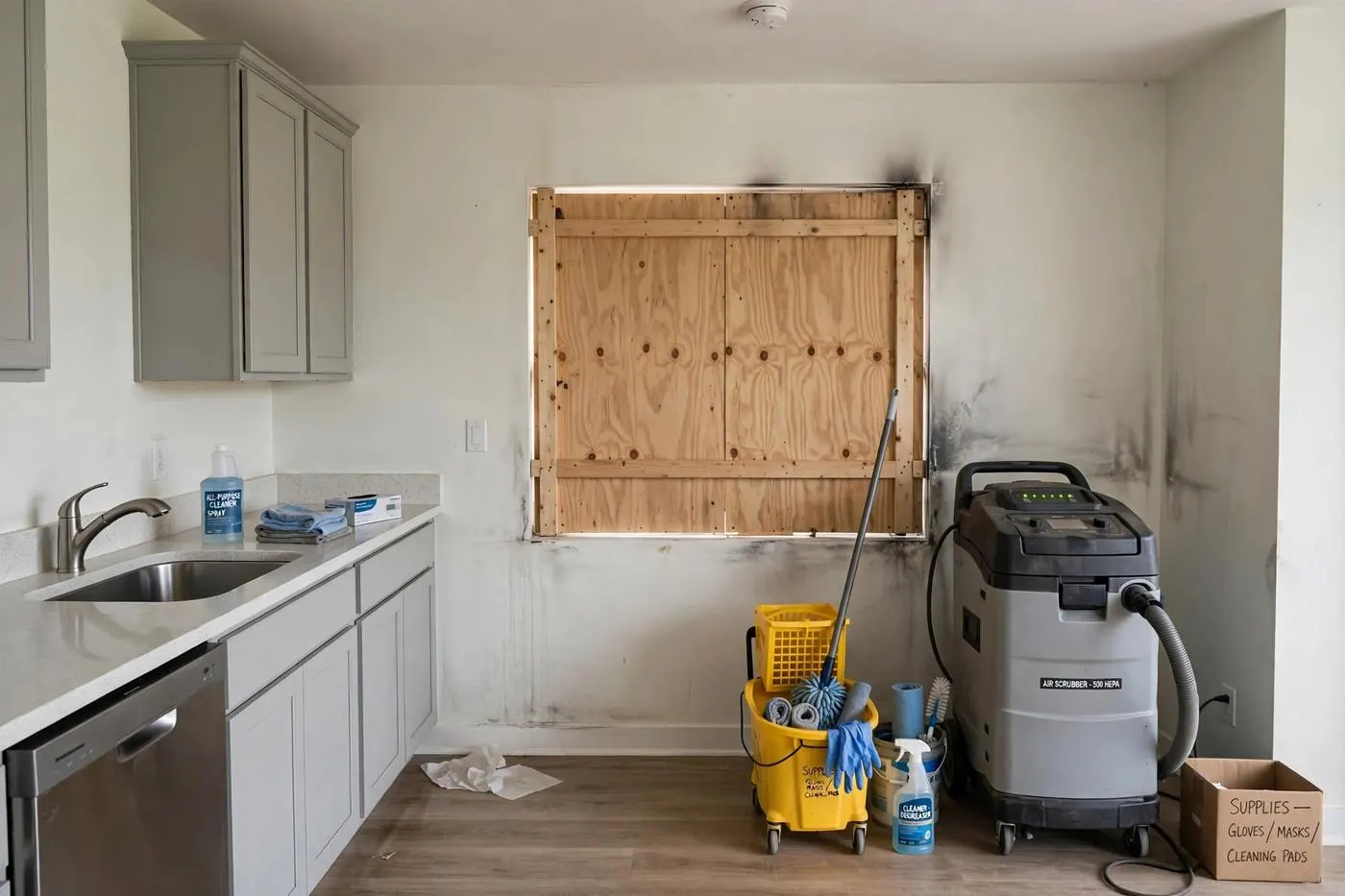
A structure fire damages in layers. There is the burned material itself, assessed for structural soundness and removed where compromised. There is soot, an acidic residue that keeps etching surfaces and metals for days if it is not neutralized. There is smoke odor, carried into ductwork and insulation far from the burn room. And there is the suppression water, thousands of gallons of it, now sitting in walls and floors. Fire damage restoration in Wellington, FL covers the whole stack: securing the property, removing debris, cleaning soot with methods matched to its type, eliminating odor at its source, and drying the structure. Restoration starts where the fire department's job ends.
Smoke and soot: not all residue is the same
Clean soot wrong and you set the stain forever.
Soot behaves differently depending on what burned, and the cleaning method has to match. Dry soot, from fast, hot fires, is powdery and lifts with dry chemical sponges and HEPA vacuuming. Wet soot, from slow, smoldering fires, smears like grease under the wrong product, and smearing it into paint or grout makes it permanent. Protein soot, from kitchen fires, is nearly invisible but carries the strongest rancid odor and coats every surface with a film that has to be degreased, not wiped. This is why a fire job starts with residue testing in hidden spots, before anyone touches a wall. The homeowner who scrubs a soot wall with a wet sponge over the weekend, trying to help, is the most expensive volunteer in this industry.
How we handle it: secure, sort, clean, deodorize, dry
Five stages, in order, because each one protects the next.
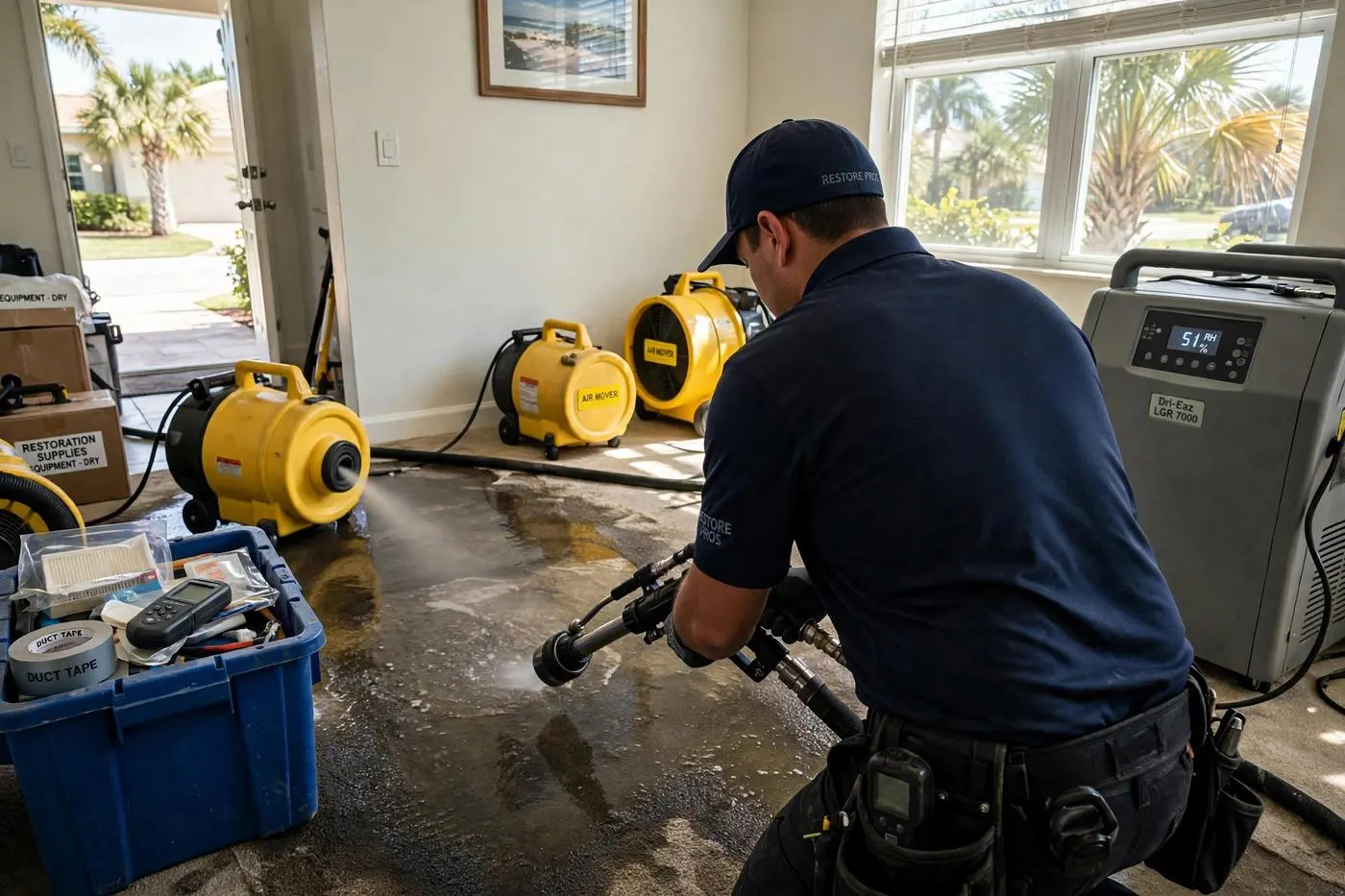
First, secure: board up openings, check structural members, make the property safe to work in. Second, sort: contents and materials triaged into salvageable, questionable, and gone, all photographed and inventoried, since what we save goes through contents cleaning and what is gone belongs in your claim file. Third, clean: soot removed surface by surface with matched methods, starting dry, moving to wet cleaning only where testing says it is safe. Fourth, deodorize: odor treated at the source, detailed in the next section. Fifth, dry: suppression water extracted and the structure dried to verified readings, because wet cavities behind cleaned walls will undo the cleaning with mold. Skip the order and you pay for stages twice.
Odor removal: cleaning the smell, not covering it
If a fire house smells like air freshener, somebody hid something.
Smoke odor is not a smell sitting on a surface. It is residue embedded in porous material, paint, insulation, soft furnishings, and the duct system that redistributes it every time the air runs. Covering it with fragrance fails within days. Real odor removal stacks methods: source removal first, because charred material and soot film are the odor, then deep cleaning of affected surfaces, then sealing primers on sound structural materials that hold odor, and finally air treatment with hydroxyl or ozone equipment in an unoccupied space. We judge the result the honest way: a house that smells neutral with the AC running and the doors closed on a warm afternoon.
Board-up and securing the property
An open fire house is an invitation: to weather, animals, and people.
Broken windows, a burned door, a hole in the roof from ventilation or collapse: after a fire, the structure is open in ways a storm never makes it. Board-up closes those openings with plywood fitted and fastened to framing, not trim, and roof openings get tarped against the afternoon rain. Securing also means re-locking an empty property and shutting damaged systems down safely. If the fire started with a storm, the roof work runs alongside our storm damage restoration process.
Fire damage in Wellington homes
Our fires start with lightning, kitchens, and garages.
Palm Beach County sits in one of the most lightning-active corridors in the country, and Wellington's summer storm cells bring strikes that hit roofs and pool equipment. Kitchen fires are the year-round constant, and they produce the worst odor work relative to their size, because protein soot travels. Garages matter here more than in most suburbs: golf carts, equestrian equipment, hay and feed in barn structures, and mower and generator fuel all live steps from the house. Seasonal occupancy adds the Wellington wrinkle: a fire in an empty house in August may be a neighbor's 911 call, and its smoke can sit in a closed house for weeks before the owner returns, setting odor deep into everything.
What drives the cost
How much burned is only the start. Soot type, spread, and odor depth finish the number.
A contained kitchen fire and a whole-house event price differently, obviously, but two fires of the same size can still land far apart. Wet soot and protein soot clean slower than dry soot. Odor sealed into insulation and ductwork costs more than odor on cleanable surfaces. Contents volume matters: sorting and cleaning a full house of belongings is a job inside the job. And suppression water adds a drying scope on top. We scope on site, separate structure from contents so the numbers are readable, and write it all down before cleaning starts. See our water damage cost guide for how restoration pricing works overall.
Related services
Fire losses pull in three siblings. Everything salvageable that came out of the house goes through contents cleaning. The water that put the fire out is dried under our water damage restoration protocol. And where suppression water sat too long, mold remediation handles the growth that followed.
Frequently Asked Questions
Can I stay in my Wellington home after a fire?
It depends on size and location. A contained kitchen fire may leave most of the house livable once cleaned. Anything with structural damage, heavy soot throughout, or compromised electrical means staying elsewhere until we say otherwise.
The fire was small. Why does the whole house smell?
Smoke travels farther than flame. It moves through ductwork, wall cavities, and open doors, and protein fires coat distant rooms with an invisible, strong-smelling film. Odor where no flame reached is normal, and it is cleanable.
Should I start cleaning soot myself to save time?
Please do not. Soot cleaned with the wrong method smears and sets permanently, and weekend scrubbing routinely turns a cleanable wall into a replacement. Photograph everything, touch nothing, and let residue testing decide the method.
Will my insurance cover fire damage restoration?
Fire is generally a covered peril, but what your policy pays is your insurer's decision, not ours. Our job is documentation: dated photos, inventories, written scope, so your claim starts from evidence. We will walk your adjuster through the file.
Request an Assessment
Tell us what happened and where. We call back with a plan and an honest read on cost before any work starts. If water is actively spreading, call (728) 235-4938 instead, a conversation beats a form when the clock is running.

Request an Assessment
Tell us what happened. We call back with a plan and an honest read on cost before any work starts.